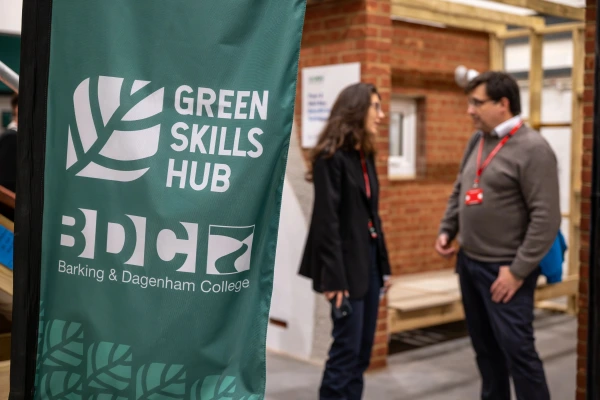


Quantum Training, a specialist in the design and installation of practical retrofit and low carbon training facilities for the further education sector, are working with Ecological Building Systems to support the delivery of hands-on, fabric-first learning environments across UK colleges. This collaboration brings together technical expertise, sustainable materials and accredited curriculum pathways to help address the national Green Skills gap.
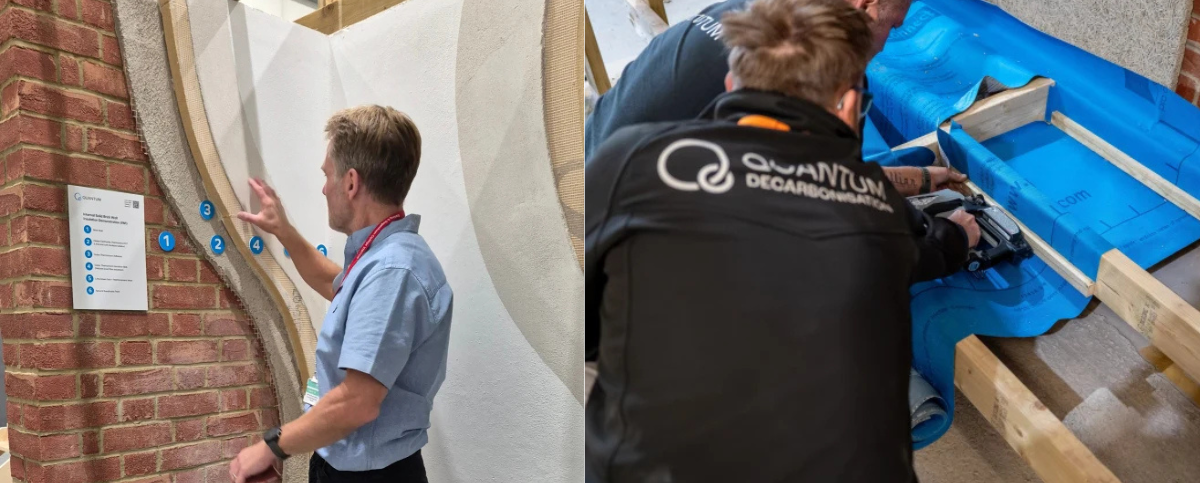
The collaboration has already contributed to projects at Northampton College, Barking & Dagenham College, Barnsley College, and the Westminster Adult Education Centre, with additional colleges in the pipeline. Each installation reflects Quantum Training’s commitment to creating realistic, high-quality learning environments that prepare learners for the demands of a low-carbon built environment.
As Maria Gonella, Quantum Training’s Managing Director, notes:
“To create meaningful impact, we must all speak with one voice. Clear, consistent and practical learning is essential to building genuine competence in sustainable construction.”
Strengthening Retrofit Competence Through Shared Vision and Technical Expertise
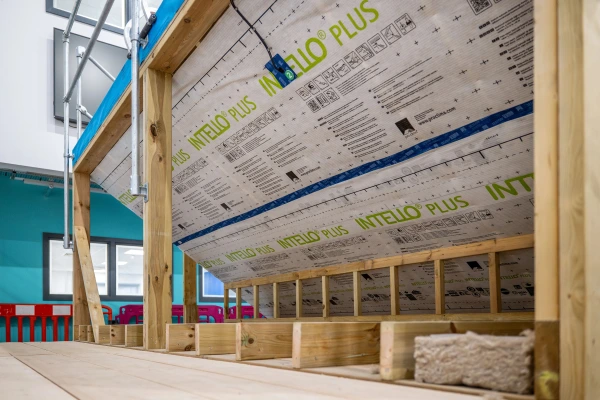
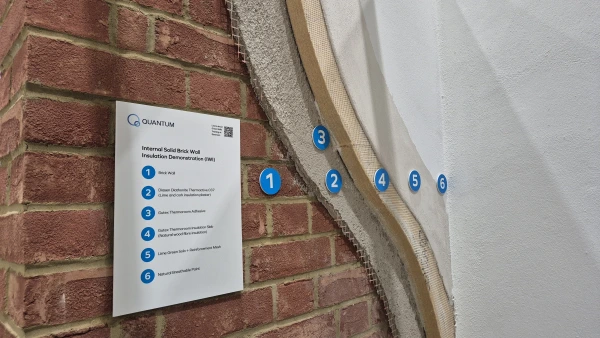
Ecological Building Systems helps ensure that each retrofit rig reflects robust building physics principles and accurate installation practice. A carefully specified range of sustainable materials, such as Pro Clima systems, Gutex woodfibre insulation, and Diasen solutions, enables learners to engage directly with vapour-open, moisture-managed build-ups and to understand sequencing, interfaces and key junctions.
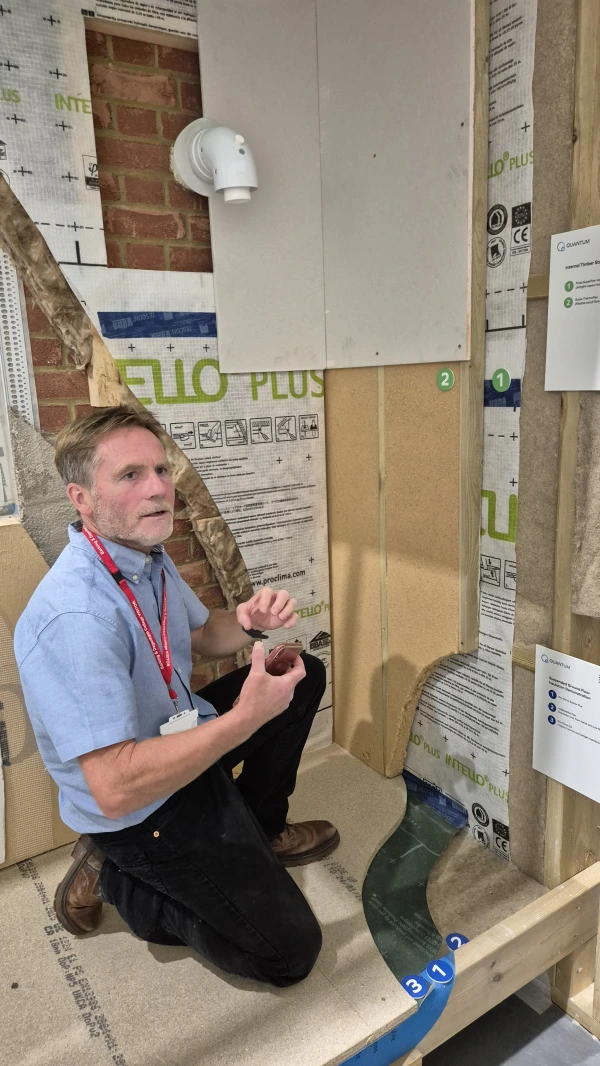
This contribution aligns with Quantum Training’s focus on practical competence. By supplying complete systems and supporting the representation of critical junctions, such as masonry/insulation interfaces and airtightness layers, we help learners see not just the “what” but the “why” behind high-performance retrofit detailing.
As Penny Randell, Director and General Manager at Ecological Building Systems UK, explains:
“Training has always been fundamental to our mission. Materials alone cannot deliver high-performance retrofit; it’s the understanding behind them that drives real quality.”
Training the Trainers: A Foundation for Scaled, Long-Term Impact
A core part of the collaboration is the Train the Retrofit Trainer programme, developed by Quantum Training with some input from Ecological Building Systems and Mount Lucas. Specifically designed for college tutors, the programme provides clear guidance, structured technical support and hands-on learning to build tutor confidence and capability.
When tutors are equipped to teach the principles of high-performance retrofit effectively, the impact extends far beyond a single installation. Competence grows across successive cohorts, strengthening the quality and consistency of the UK’s retrofit education landscape.
Supporting a Diverse Learner Profile Across the Sector
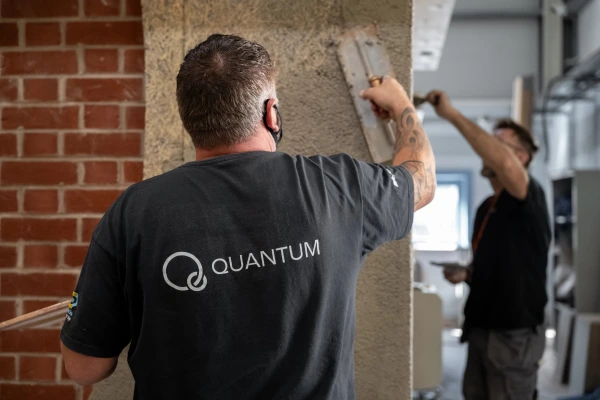
Quantum’s retrofit facilities and NOCN-certified programmes support a wide range of learners, from 16–19 year olds entering the sector to adult learners retraining or upskilling for sustainable construction careers. Colleges can deliver short, intensive Bootcamp and SWAP programmes, as well as broader guided-learning-hour courses aligned with progression pathways.
This combination of practical training, accredited curriculum and tutor development plays a vital role in strengthening the Green Skills pipeline and connecting education with the real-world needs of the built environment.
Driving National Progress Toward a Low-Carbon Future
Quantum Training and Ecological Building Systems share a long-term commitment to supporting the UK’s transition to a low-carbon built environment. By integrating high-quality practical facilities with sustainable materials and robust technical teaching, this partnership helps equip learners with the competence needed to deliver future retrofit and construction projects with confidence.
As Maria highlights, these facilities have the potential to support one of the most significant shifts in the UK’s approach to Green Skills, preparing a workforce capable of meeting the challenges of climate-responsive construction.